
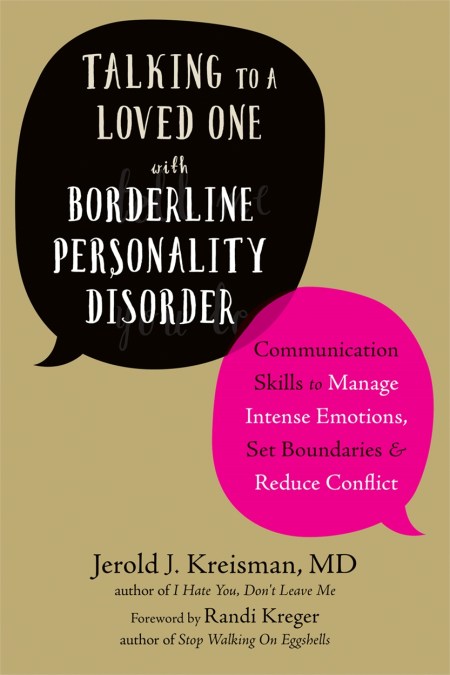
In this compassionate guide, Jerold Kriesman-author of I Hate You, Don’t Leave Me-offers a powerful set of tools to help you express yourself, set boundaries, and cultivate healthy communication with a loved one who is diagnosed with borderline personality disorder (BPD).
If you have a loved one with BPD, you need real, proven-effective strategies to help you navigate the intense emotions and conflict that can arise in daily interactions and conversations. People with BPD often feel anger, pain, and hurt from a history of invalidation and disappointment, and their difficulty in regulating emotions can lead to moments of lashing out that can confuse and upset those around them.
Written by a psychiatrist with more than 40 years of experience in treating BPD, I Hate You, Tell Me You Love Me offers a breakthrough, compassionate approach to communicating with a loved one who has BPD. The SET (support, empathy, truth) method outlined in this book is a powerful and simple tool that will allow you to honestly address your loved one’s demands, assertions, and feelings while still maintaining appropriate boundaries. Each step builds on the last, helping you build up a consistent and reliable communication process.
In this book, you’ll find a review of BPD and the common communication problems inherent in the disorder. You’ll learn how SET can address these issues. And finally, you’ll find detailed examples of specific scenarios that can arise when talking to a loved one with BPD.
Remember-validation isn’t the same as agreement. You can help your loved one feel validated while still maintaining your own boundaries. This essential guide will show you how.
If you have a loved one with BPD, you need real, proven-effective strategies to help you navigate the intense emotions and conflict that can arise in daily interactions and conversations. People with BPD often feel anger, pain, and hurt from a history of invalidation and disappointment, and their difficulty in regulating emotions can lead to moments of lashing out that can confuse and upset those around them.
Written by a psychiatrist with more than 40 years of experience in treating BPD, I Hate You, Tell Me You Love Me offers a breakthrough, compassionate approach to communicating with a loved one who has BPD. The SET (support, empathy, truth) method outlined in this book is a powerful and simple tool that will allow you to honestly address your loved one’s demands, assertions, and feelings while still maintaining appropriate boundaries. Each step builds on the last, helping you build up a consistent and reliable communication process.
In this book, you’ll find a review of BPD and the common communication problems inherent in the disorder. You’ll learn how SET can address these issues. And finally, you’ll find detailed examples of specific scenarios that can arise when talking to a loved one with BPD.
Remember-validation isn’t the same as agreement. You can help your loved one feel validated while still maintaining your own boundaries. This essential guide will show you how.
Reviews
"Those who struggle to keep the peace with difficult people in their daily lives will find these explanations and strategies extremely informative and helpful. You can be effective, and Jerold Kreisman will show you how!" —Sandy Hotchkiss, PsyD, LCSW, author of Why Is It Always About You?
"For anyone who loves, lives with, or must care for a person struggling with BPD, Jerold Kreisman has written another useful guide full of empathic and pragmatic techniques. All too often, interactions with these individuals prove to be confusing, painful, and sometimes infuriating; Kreisman outlines a detailed approach for coping and keeping your head. As a clinician who has worked with individuals who suffer from this disorder, as well as the people who know them, I found his guidance to harmonize with my own experience and to echo the advice I often give to my own clients." —Joseph Burgo, PhD, psychotherapist, PsychologyToday blogger, and author of The Narcissist You Know, Why Do I Do That?, and the forthcoming Shame
"Borderline personality disorder (BPD), which can be difficult for clinicians to manage, can also be painful for families and loved ones. They need help to avoid conflict and to respond in helpful ways. This book, written in highly accessible language, provides many practical tips on communicating about intense emotions and understanding troubled people." —Joel Paris, MD, professor in the department of psychiatry at McGill University, and author of Treatment of Borderline Personality Disorder